Spirit wear fundraising
What Actually Sells in a School Spirit Wear Store
Range size, product mix, design legibility and pricing: the decisions that determine whether a school spirit wear store sells or stalls.
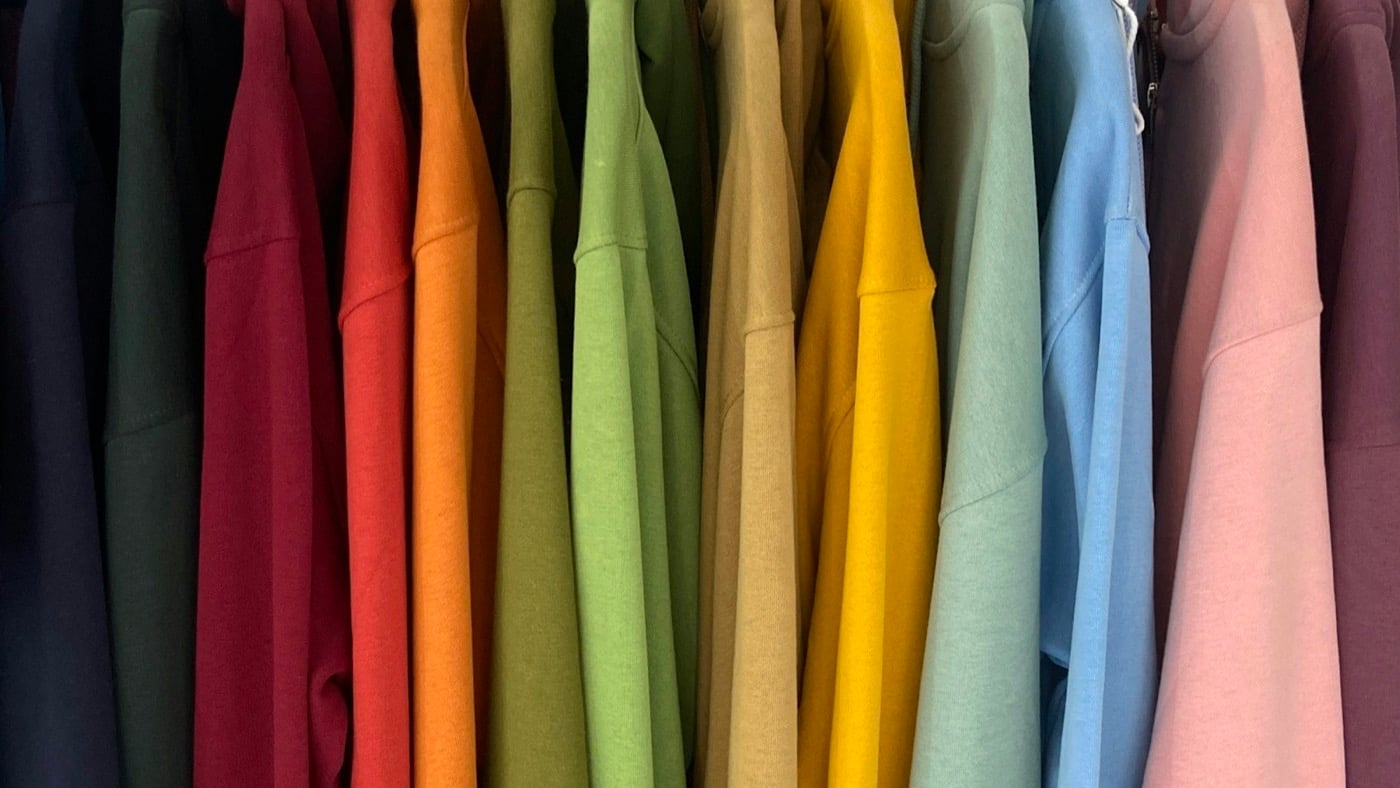
The most common mistake in a school spirit wear store is generosity. The club wants everyone to find something, so the store launches with forty products in nine colors. What follows is not more sales but fewer, because a buyer with too many options resolves the discomfort by closing the tab. A tight range built around the people who actually reach for a card will outperform a catalog almost every time.
Design for the buyer, not the athlete
Athletes already have team-issue kit. The people spending money in a spirit wear store are mostly not on the roster:
- Parents, who want something warm to wear in a stand in October and something that says which kid is theirs.
- Grandparents and extended family, who buy in the run-up to the holidays and want simple, comfortable, obvious-fitting items.
- Students who are not on the team, who buy what looks good in a hallway rather than what looks like a uniform.
- Staff and faculty, who want something they can wear on a Friday without looking like a fan.
- Alumni, who buy on nostalgia and are the most under-served group in most stores.
- Siblings, which is the entire argument for stocking youth sizes.
Read that list back and the range brief writes itself: comfortable, wearable in cold weather, legible from a distance, and not so team-specific that a chemistry teacher would feel odd in it.
The core range
Eight to twelve products is a good target for a launch range. Something like this:
Hooded sweatshirt
The anchor of the range and the highest ticket item most stores carry, which makes it the single biggest driver of total order value. Offer it in the primary school color and one neutral. Heather gray sells to people who would not wear head-to-toe team colors.
Crewneck sweatshirt
The same warmth without the hood, and it reads as less athletic. This is the item that sells to staff and to parents who want something smarter.
Short-sleeve tee
The entry price point and the item that converts first-time buyers. Its job is to get someone through checkout, after which the second order is easier.
Long-sleeve tee
Sells through a much longer part of the year than the short sleeve in most of the country, and layers under a jacket at a night fixture.
Quarter-zip or performance layer
The coaches-and-parents item. It sells at a higher price than a sweatshirt because it looks like something you would buy anyway.
Cap or beanie
Low price, no size problem, high impulse rate. A beanie in particular sells all winter.
Sweatpants or joggers
High value, popular with students, and a reliable holiday gift when paired with a matching hoodie.
One non-apparel item
A stadium blanket, a tote, or a car decal. These sell to grandparents and to people who do not want to guess a size, which is a bigger group than it sounds.
Add youth sizes across the main items. Younger siblings in matching gear is one of the most reliable repeat purchases a school store has.
What tends to underperform
- Anything with a specific year printed on it. "2026 Season" is unsellable in January. Keep dated designs to a deliberate, limited drop and leave the core range evergreen.
- Rosters with every athlete's name. They look great and they date instantly. Seniors graduate, and nobody buys last year's roster.
- Too many colorways of the same garment. Three colors of hoodie is a choice; seven is a decision the buyer has to make instead of buying.
- Designs that need to be read up close. If it does not resolve from the far side of a gym, it is not spirit wear.
- Sport-specific gear as the whole range. A store branded entirely to one team excludes the school-wide audience that makes the numbers work. Carry a school-wide core, then add team-specific items.
- Anything requiring an exact size the buyer has to guess for someone else. This is the argument for hats, blankets and totes in a gift-buying season.
Design rules that hold up
Legibility beats cleverness
The test for a spirit wear design is whether a stranger in the opposite stand can read the school name. Heavy weight, generous letter spacing, high contrast against the garment. Thin scripts and drop shadows fail this test.
Two colors, mostly
School palettes are already two colors. Adding a third to a print usually costs legibility and gains nothing, and it makes the design harder to place on a garment that is itself a school color.
Give the range one identity
A store where every product uses a different lockup looks like a clip-art folder. Pick a primary lockup, a secondary mark and one wordmark, then apply them across the range. It looks like a brand, which is exactly the signal that makes a store feel official.
Check the print position on the sample
A design that looks balanced in a mock-up can sit too high on an actual garment. Get a physical sample before launch, and look at it on a person rather than on a table.
Personalisation
Adding a name or number to an item raises what people will pay for it and makes it a gift rather than a purchase. Two cautions. First, personalised items cannot be resold if an order goes wrong, so the ordering flow has to make the spelling obvious before checkout. Second, if you are printing student names, make sure the school is comfortable with that from a privacy standpoint — some districts have views, and it is a much easier conversation before launch than after.
Pricing
In a print-on-demand store the pricing is usually set by the provider, but it is worth understanding the shape you want.
- Have a genuine entry price. One item that a student can buy with their own money. It exists to create first-time buyers, not to make margin.
- Do not underprice the hoodie. The people buying it are comparing it to a retail hoodie, not to a t-shirt. Pricing it apologetically leaves money on the table and does not increase volume.
- Bundles work when they are obvious. A hoodie and sweatpants shown together sells both. A bundle that requires arithmetic sells neither.
- Round numbers read as considered. Odd-cent pricing reads as retail, which is the opposite of the "this supports the program" signal you want.
Use the calendar as your merchandising plan
| Moment | What to add | Why it works |
|---|---|---|
| Season launch | Core range, school-wide | Highest attention of the year |
| First cold snap | Push the hoodie and beanie | Weather does the selling |
| Playoffs | One dated, limited item | Urgency is genuine, not manufactured |
| Winter holidays | Gift items, blankets, youth sizes | Buyers are grandparents, not students |
| Senior night | Personalised and class-year items | Emotional, high value, one-time |
| Graduation | Alumni-framed designs | The only moment alumni are paying attention |
Each of those is a reason to contact your families that is not simply "please buy something", which is the entire trick of promoting a store without wearing people out. There is more on that in how to promote your school spirit wear store.
How to find out what your school actually buys
Everything above is a starting point, not a verdict. Your school has its own answer, and one season of data will beat any general advice. Launch with a tight range, look at what sold after the first eight weeks, retire the bottom two products and add two more like the top two. Repeat once a season. That loop is worth more than any list, including this one.
Range and product questions
- How many products should a school spirit wear store carry?
- Eight to twelve at launch is a sensible target. Too much choice slows buyers down and spreads attention thinly across the range. Start tight, look at what sells after the first two months, and expand deliberately.
- Should spirit wear be branded to the school or to the team?
- Carry a school-wide core range and add team-specific items alongside it. A store branded entirely to one team cuts out the staff, alumni and general student audience that makes the totals work.
- Are personalised names and numbers worth offering?
- Usually yes — they raise what people will pay and turn an item into a gift. Make sure the spelling is confirmed before checkout, since personalised items cannot be resold, and check that your school is comfortable with student names being printed.
- Should we print the year on spirit wear?
- Only on a deliberate, limited drop tied to a real moment such as a playoff run. Dated designs stop selling the moment the date passes, so the core range should be evergreen.