Vendor selection
Printing Your Own Spirit Wear vs Using a Vendor
What it actually costs a booster club to print and sell its own spirit wear, versus using a vendor, once volunteer hours and unsold stock are counted.
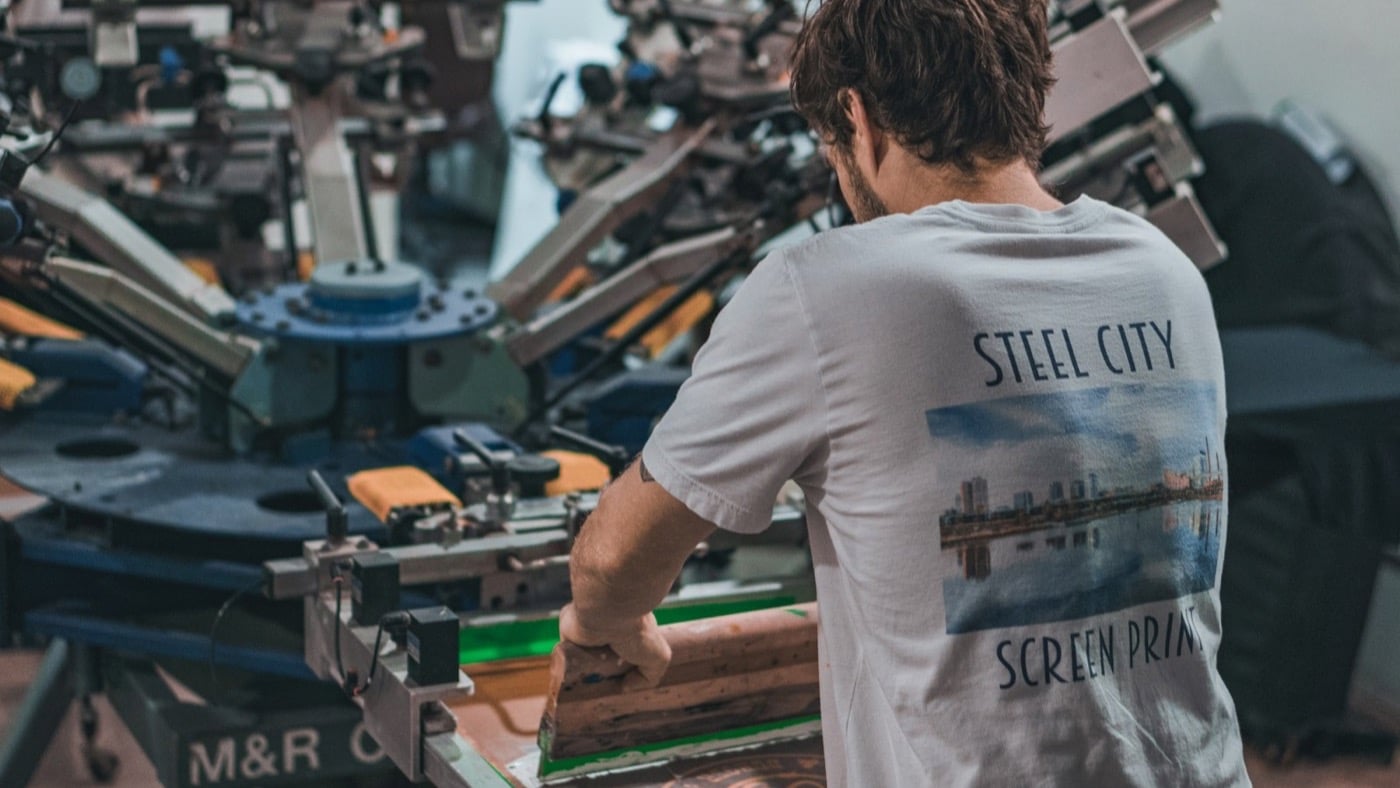
Every booster club eventually does this arithmetic. Blank hoodies are around twelve dollars. A local shop will print them for six. Sell at thirty-five and the club keeps seventeen a unit, which is roughly half the retail price and far more than any vendor is offering.
The arithmetic is correct. It is also incomplete, and the missing terms are the ones that decide whether the fundraiser actually worked.
What the per-unit number leaves out
Printing your own works on the assumption that you sell what you bought, which is the assumption a print-on-demand store removes. Three things routinely break that assumption, and they compound.
- You have to buy before you know demand. Sizes are guessed. Every club over-orders medium and large and runs out of small and XXL, and the leftovers are dead stock the club paid for in advance.
- Somebody stores it. Usually a volunteer's garage, usually the same volunteer, usually until August of the following year.
- Somebody distributes it. Sorting, bagging and handing out two hundred orders is a real job that lands on two or three people, and it lands during the busiest week of the season.
None of those appear in the per-unit calculation, and all three are where self-printed fundraisers actually fail.
The same fundraiser, both ways
Take a club aiming to sell two hundred hoodies. The self-print column assumes an optimistic eighty percent sell-through, which is better than most clubs achieve on a first run.
| Print your own | Vendor store | |
|---|---|---|
| Up-front cash needed | $3,600 for 200 blanks and printing | $0 |
| Units actually sold | 160 | 160 |
| Unsold stock | 40 units, $720 already spent | None — printed after purchase |
| Gross revenue at $35 | $5,600 | $5,600 |
| Club keeps | $2,000 after the full $3,600 outlay | $1,120 at 20% of order value |
| Volunteer hours | 40 to 60, concentrated in one week | Close to zero after launch |
| Who carries the risk | The club | The vendor |
Printing your own still wins on the money, and it is worth being straightforward about that. Two thousand dollars beats eleven hundred. What the table shows is what the extra nine hundred dollars costs: three and a half thousand in cash the club has to have first, forty units of dead stock, and roughly fifty hours of volunteer time.
Whether that is a good trade depends entirely on the club, and the honest answer is that it sometimes is.
When printing your own is the right call
- A known, fixed quantity. Team-issued kit where you have a roster and every unit is spoken for before it is ordered. There is no size guessing and no unsold stock, which removes both failure modes at once.
- One design, one event. A championship shirt for a specific game, ordered against pre-sales rather than speculatively.
- A club with a genuine volunteer bench. Not four officers who will absorb it, but a group of ten or more who have actually said yes.
- Cash the club can afford to lose. If the run does not sell, the money is gone. Clubs treat this as a cash-flow question and it is really a risk question.
When a vendor store is the right call
- Nobody knows what will sell. A store finds out for you without the club paying to learn the lesson.
- A wide range rather than one item. Twenty products across ten sizes is impossible to stock and trivial to list.
- The audience is larger than the roster. Extended family, alumni and a general school audience buy at unpredictable times, which is exactly what print-on-demand handles and bulk ordering does not.
- The volunteer group is small or turns over annually. A fundraiser that depends on one person still being there next season is not a program, it is that person.
The two hidden costs on the self-print side
Sales tax
A club printing and selling its own merchandise is generally the seller, which makes collecting and remitting sales tax the club's obligation rather than somebody else's. This is separate from federal exemption and catches clubs out constantly — see sales tax on spirit wear and fundraiser merchandise.
Licensing the school's marks
The school name, logo and mascot belong to the district, and printing them without written permission is the same problem whoever runs the press. It is worth settling before artwork exists rather than after a hundred shirts do — who owns your school's logo covers what to ask for.
A reasonable middle position
Plenty of clubs run both, and it is usually the right answer. Print your own for the one high-volume item you are confident about, ordered against pre-sales, and run a store for the long tail of sizes, styles and extended-family purchases that would be irrational to stock.
That gets the better margin where the risk is low and removes the risk where the margin was never going to justify it. If you are weighing the ordering mechanism specifically, an online team store versus a bulk order works through that side of it in more detail.
Frequently asked questions
- Is it cheaper to print our own spirit wear?
- Per unit sold, yes, usually by a wide margin. Per fundraiser, it depends on sell-through. At eighty percent sell-through printing your own still comes out ahead on cash; below about sixty percent the unsold stock erases the advantage, and the club has also spent the volunteer hours.
- What percentage do spirit wear vendors take?
- It varies, and the thing to check is what the percentage is calculated on. A share of total order value and a share of margin after costs are very different numbers wearing the same word. Ask which one you are being quoted, in writing.
- Can we do both?
- Yes, and many clubs should. Bulk-order the single item you are confident about against pre-sales, and use a store for the range of sizes and styles it would be irrational to stock speculatively.
- What happens to unsold stock?
- It stays the club's, which is the part worth thinking about before ordering rather than after. It is normally sold at a discount the following season, given away, or stored indefinitely, and all three are worse than not having bought it.