Vendor selection
Who Owns Your School's Logo? Permission Before You Print
Who licenses a school name, logo and mascot, why a college mark is a separate problem, and how to get written permission before a spirit wear store opens.
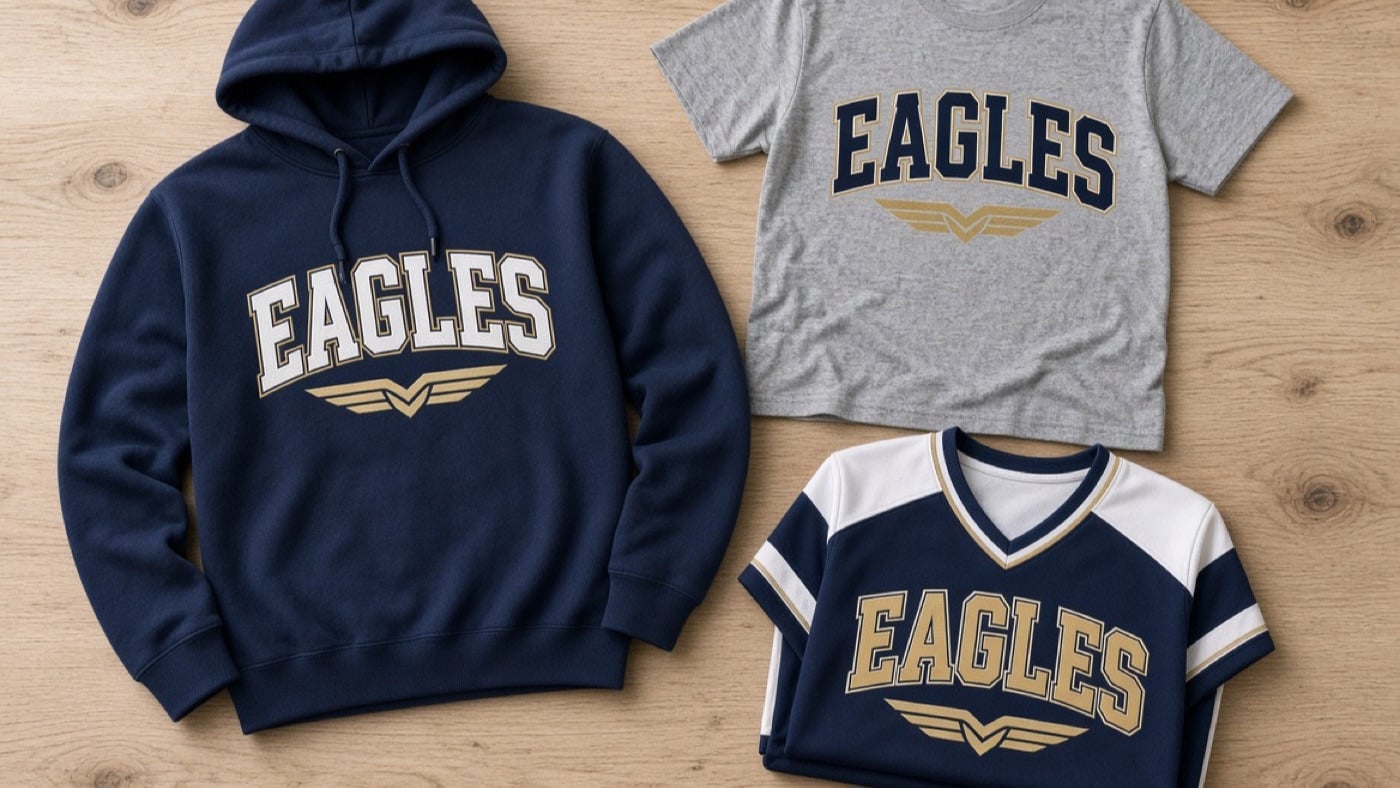
Almost every spirit wear problem we are asked to fix started the same way: somebody designed the shirts first and asked about permission second. It is an easy order to get wrong, because the design is the fun part and the permission feels like a formality. It is not a formality, and the cost of discovering that late is a print run nobody can sell.
This is the short version of who owns what, who to ask, and what to get in writing.
The school almost never owns the mark
This is the part that surprises people. A booster club talks to the athletic director, the athletic director says the design looks great, and everyone treats that as approval. But the name, logo and mascot are normally the district's property, not the individual school's, and an athletic director usually has no authority to license them.
That is not a criticism of the AD. It is a question they are asked constantly and often are not the right person to answer. In a unified district there is one office that can; in a union high school district the high school marks and the feeder school marks belong to different offices entirely. Our Orange County district pages spell out which is which for the districts we cover, because a club that asks the wrong office can be several weeks in before anyone notices.
The practical version: ask who licenses the mark, not whether the design looks good. Those are different questions and only one of them is binding.
What to get in writing, and why
Verbal approval is worth very little six months later, when the person who gave it has moved on and a new administrator is asking who authorized a store selling shirts with the school crest on them. The written version does not need to be long.
- Who is permitted to use the mark. The club by name, not "the boosters" generally.
- Which marks. The school name, the logo, the mascot, the athletic wordmark — list them, because approval for one is not approval for all four.
- For how long. A season, a school year, or until withdrawn.
- Any conditions. Approved color values, minimum clear space, a requirement that designs be reviewed before going live.
- Who signed it. With a title that plausibly carries the authority.
A vendor asking for this is a good sign rather than an obstacle. A vendor that never mentions it is telling you they will print whatever you send and the risk is entirely yours.
The borrowed logo problem
Here is the one that actually gets stores shut down. A high school whose mascot matches a well-known college team adopts something close to that college's mark — the same letterform, the same silhouette, the same color pairing. It has been on the gym wall for thirty years and nobody has ever objected, so it feels settled.
It is not settled, and the difference between a gym wall and a store is commerce. Universities license their marks as a revenue stream and many use agencies specifically to monitor commercial use. A mural is one thing; a storefront selling garments is exactly what that monitoring is looking for.
You can check whether a mark is federally registered yourself, free, in the USPTO's Trademark Search database. If your school's mark is visibly derived from a registered one, the conversation to have is with the district before the store opens, not with a rights holder afterward.
Sponsor logos are a second permission
If a local business is underwriting the shirts and their logo goes on the sleeve, that is a separate grant from a separate owner. A verbal yes from the owner of one franchise location does not necessarily cover a national brand's mark, and national brands generally have specific rules about how their logo may be reproduced.
Ask the sponsor for their logo files and their usage guidelines together. A business that sponsors school programs regularly will have both ready, and it takes one email.
Where this fits in the sequence
Confirm who licenses the mark
The district office in most cases. Ask directly rather than inferring it from who was enthusiastic about the idea.
Get written permission
Naming the club, the specific marks, the duration and any conditions. Keep it with the club's records rather than in one volunteer's inbox.
Check for a borrowed mark
If the logo resembles a college's, raise it before launch. This is the failure that is expensive to unwind.
Collect sponsor permissions separately
Logo files plus usage guidelines, from each sponsor whose mark will appear.
Then design
With the constraints known, so the range you approve is one that can actually be printed.
Frequently asked questions
- Does the booster club own the logo if it paid for the design?
- Paying a designer usually buys the artwork, not the right to use the school's identity within it. If the design incorporates the school name, crest or mascot, the underlying marks still belong to whoever owned them before, and that is normally the district.
- We have used this logo for years. Do we still need permission?
- For a store, yes, and long use is not the same as a license. Selling garments is commercial use, which is treated differently from a banner in the gym, and the person who tolerated one may not have authority over the other.
- Can the district revoke permission after the store opens?
- Generally yes, which is why the written grant should say how long it runs and under what conditions. A store built on print-on-demand is straightforward to pause because there is no inventory sitting in a warehouse.
- What if our mascot is the same as a college team's?
- A shared mascot name is common and rarely a problem by itself. A shared *logo* — the same letterform, silhouette or color treatment — is the thing to check, and the USPTO search database is free to search before you print anything.